Understanding Williams Wall Furnaces
Williams produced heaters for various brands like Dayton, Sears, and Kenmore, making manual location tricky. Online forums and direct contact with Williams can help locate resources.
Historical Context of Williams Furnaces
Williams furnaces gained prominence in the mid-20th century, becoming a staple in homes, particularly those built in the 1960s, as evidenced by inquiries regarding older models. Their widespread adoption led to Williams manufacturing units under various brand names, including Dayton, Dearborn, Kenmore, and Sears.
This practice complicates identifying original manuals, as users often encounter models branded by these retailers. The company’s longevity means a significant number of these furnaces remain in service, prompting ongoing searches for documentation and parts. Finding resources requires navigating this complex branding history and utilizing online communities for assistance.
Williams Furnace Manufacturing Timeline
Establishing a precise Williams furnace manufacturing timeline proves challenging due to the company’s practice of producing units for multiple brands – Dayton, Kenmore, Sears, and others. This obscures direct dating based solely on model numbers.
However, knowing a home’s construction date (like the 1960s example cited) provides a reasonable timeframe. The availability of manuals diminishes with age, making older models like the FO 038145 harder to document. Williams’ ongoing support, including cross-referencing obsolete numbers, aids in identifying approximate production periods.
Identifying Your Williams Wall Furnace
Locate the model and serial number plate for identification; these are crucial for finding manuals or compatible parts for your Williams unit.
Locating the Model and Serial Number
Finding the model and serial number is the first step in identifying your Williams wall furnace and accessing relevant documentation. These identifiers are typically located on a metal plate affixed to the unit’s casing.
Carefully inspect the furnace, often near the burner assembly or on the side panel, for this plate. The model number, like A35-Samp, and the serial number, such as A 76636, are essential for cross-referencing with obsolete model lists or contacting Williams directly for assistance.
Photographing the plate can be helpful when seeking information online or from customer support, as it ensures accurate transmission of the identifying details.
Decoding Williams Model Numbers (e.g., A35-Samp)
Williams model numbers, such as A35-Samp, contain coded information about the furnace. While a definitive breakdown isn’t publicly available, the prefix (like A35) likely indicates a series or manufacturing period. The suffix (like -Samp) may denote specific features or gas type compatibility.
Understanding these codes is crucial when searching for replacement parts or compatible manuals. Because Williams manufactured for other brands, knowing the original Williams number is vital.
Online forums suggest that direct communication with Williams is often the most effective way to decipher specific model number details and find corresponding documentation.
Cross-Referencing Obsolete Model Numbers
Williams provides a link for “Obsolete Models” that cross-references older numbers to newer equivalents, aiding manual searches. However, this resource may not cover all discontinued models. Many older Williams furnaces were also rebranded under names like Dayton, Sears, and Kenmore, complicating identification.
If the direct cross-reference fails, online forums like DoItYourself.com and Reddit’s r/hvacadvice can be invaluable. Users often share knowledge and experiences with specific, hard-to-find models.
Remember to provide the full model and serial number when seeking assistance, maximizing the chances of a successful match.
Common Williams Wall Furnace Models
Popular models include the FO 038145 (propane), 6257731 (similar to FO 038145), and 1403822 (direct-vent, 14K BTU) – manuals are sometimes interchangeable.
Model FO 038145 – Propane Wall Heater
The Williams Model FO 038145 is a propane-fueled wall heater frequently found in older cabins and smaller spaces. Finding a dedicated manual can be challenging, but the Model 6257731 manual often serves as a suitable substitute due to significant similarities in design and operation.
Users on DoItYourself.com forums have noted this interchangeability, particularly when troubleshooting fan wiring issues. Given its age and common installation in high-altitude locations (like a cabin at 5200ft), understanding altitude adjustments is crucial for optimal performance and safety. Always prioritize safety when working with propane appliances.
Model 6257731 – Similar to FO 038145
The Williams Model 6257731 shares a close resemblance to the FO 038145, making its manual a valuable resource for owners of the latter, especially when a dedicated FO 038145 manual is unavailable. Online discussions highlight this compatibility, particularly regarding internal components and wiring diagrams.
Both models are older propane wall heaters often found in remote locations. Troubleshooting guides for the 6257731 can effectively address common issues like fan malfunctions; Remember to consider altitude adjustments, especially if the unit is installed above 5200 feet, to ensure safe and efficient operation.
Williams 1403822 – Direct-Vent, 14K BTU
The Williams 1403822 is a 14,000 BTU, direct-vent gas wall furnace with a 65% AFUE rating, designed for natural gas operation. Its direct-vent technology enhances safety by drawing combustion air from outside and exhausting gases directly outdoors, minimizing indoor air contamination.
This model is rated for altitudes up to 2,000 feet, requiring adjustments for higher elevations. While a dedicated manual is crucial, understanding direct-vent principles is key. Proper installation and maintenance are vital for optimal performance and longevity, ensuring efficient heating and safe operation.
Troubleshooting Common Issues
Initial checks for no heat include verifying gas supply and power. Fan wiring issues are common in older models, while altitude impacts performance above 5200ft.
No Heat – Initial Checks
When your Williams wall furnace fails to produce heat, begin with fundamental checks. First, confirm the gas supply is active and reaching the unit; check other gas appliances. Next, verify the furnace receives electrical power – inspect the circuit breaker or fuse.
Ensure the unit’s pilot light (if applicable) is lit, following the manufacturer’s instructions carefully. A faulty thermocouple can prevent the pilot from staying lit. Finally, visually inspect the burner assembly for any obstructions or debris that might hinder ignition.
Fan Wiring Problems (Older Models)
Older Williams propane wall heaters, like model FO 038145, often present fan wiring challenges. A common issue involves corroded or loose wire connections within the fan motor housing. Carefully inspect all wiring for damage, ensuring secure connections to the motor and control board.
If the fan doesn’t operate, test the fan motor directly with a power source to determine if the motor itself is faulty. Remember to disconnect power before working with wiring, and consult a wiring diagram if available.
Altitude Considerations (5200ft+ Elevation)
Williams wall furnaces, particularly older models, require altitude adjustments for optimal performance above 5200 feet. Reduced oxygen levels at higher elevations can cause incomplete combustion, leading to soot buildup and reduced heating efficiency;
The model FO 038145, frequently found in mountain cabins, is susceptible to this issue. Adjustments typically involve changing the orifice size to allow for a richer fuel mixture. Always consult a qualified technician for these adjustments to ensure safe and efficient operation.
Maintenance and Repair
Regular cleaning of the burner assembly and checking gas connections are vital for safe operation. A consistent maintenance schedule extends the furnace’s lifespan effectively.
Regular Maintenance Schedule
Establishing a routine maintenance schedule is crucial for the longevity and safe operation of your Williams wall furnace. Annually, a professional inspection is recommended, focusing on gas connections and burner integrity. Before each heating season, visually inspect the venting system for obstructions or damage, ensuring proper airflow.
Monthly during use, check and clean the air filter to maintain efficient heating and air quality. Periodically, vacuum around the furnace to remove dust and debris. Remember, consistent attention prevents potential hazards and costly repairs, maximizing performance and safety.
Cleaning the Burner Assembly
Before attempting to clean the burner assembly, always disconnect the gas supply and allow the furnace to cool completely – safety first! Carefully remove the burner assembly following the manual’s instructions. Use a soft brush and vacuum to remove dust, debris, and any obstructions from the burner ports.
Inspect the burner for corrosion or damage, replacing parts as needed. Ensure all components are properly aligned upon reassembly. A clean burner assembly ensures efficient combustion and prevents the buildup of harmful gases, contributing to safe and reliable operation.
Checking Gas Connections
Prioritize safety: before inspecting gas connections, shut off the gas supply to the furnace. Utilize a soap and water solution to test all gas connections for leaks – apply it to joints and observe for bubbles. Tighten any loose connections carefully, avoiding over-tightening which can damage fittings.
Inspect gas lines for corrosion or damage, replacing them if necessary. Never use an open flame to check for leaks. Properly secured and leak-free gas connections are crucial for safe and efficient furnace operation, preventing dangerous gas buildup.
Safety Precautions
Install carbon monoxide detectors near the furnace and ensure proper ventilation to prevent dangerous gas accumulation. Regular checks are vital for safety.
Carbon Monoxide Detection
Williams wall furnaces, especially older models, require diligent carbon monoxide (CO) monitoring. CO is a colorless, odorless, and potentially fatal gas produced by incomplete combustion. Install CO detectors on every level of your home, particularly near sleeping areas and the furnace itself.
Test detectors monthly and replace them according to the manufacturer’s instructions – typically every five to seven years. Be aware of CO poisoning symptoms: headache, dizziness, weakness, nausea, vomiting, chest pain, and confusion; If a detector alarms, evacuate immediately and call emergency services. Proper furnace maintenance and ventilation significantly reduce CO risk.
Gas Leak Identification
Detecting gas leaks around your Williams wall furnace is crucial for safety. The distinctive smell of natural gas or propane – often described as a sulfurous or rotten egg odor – is a primary indicator. Never use open flames to search for leaks; instead, utilize a gas leak detector spray or soapy water solution.
Apply the solution to gas connections; bubbles indicate a leak. If you suspect a leak, immediately shut off the gas supply at the source, evacuate the premises, and contact your gas company or emergency services from a safe location. Do not operate any electrical switches.
Proper Ventilation
Williams wall furnaces, particularly older models, require adequate ventilation for safe operation. Non-direct-vent systems draw combustion air from the room and exhaust gases through a chimney or vent pipe, necessitating unobstructed airflow. Ensure vents are clear of obstructions like debris or snow to prevent carbon monoxide buildup.
Direct-vent models are sealed combustion, drawing air from outside, but still require room ventilation for occupant safety. Regularly inspect venting systems for damage or corrosion. Never operate a furnace in a confined space without proper ventilation.
Finding Manuals and Resources
Williams offers a link for obsolete models, while forums like DoItYourself.com and Reddit’s r/hvacadvice provide community support and manual assistance.
Williams Obsolete Models Link
Williams provides a valuable resource for owners of older units: a dedicated link for cross-referencing obsolete model numbers to potentially newer equivalents. This is particularly helpful when the original documentation is lost or unavailable.
Finding a direct manual for a vintage Williams wall furnace can be challenging, but this link offers a pathway to understanding compatible parts or identifying similar, currently supported models. It acknowledges that Williams manufactured units under various brand names – Dayton, Dearborn, Kenmore, and others – further complicating the search.
Utilizing this resource is a crucial first step in troubleshooting or performing maintenance on an older Williams furnace, potentially unlocking access to relevant information and support.
Online Forums (DoItYourself.com, Reddit r/hvacadvice)
DoItYourself.com’s community forums and the Reddit subreddit r/hvacadvice are excellent platforms for seeking assistance with Williams wall furnaces. Users frequently share experiences, wiring diagrams, and troubleshooting tips for these older units.
Specifically, discussions cover issues like fan wiring on models such as the FO 038145, and questions regarding age determination based on serial numbers like A 76636.
These forums offer a collaborative environment where owners can connect, exchange information, and potentially find solutions not readily available in official documentation, especially for obsolete models.
Contacting Williams Directly
Despite being an older brand, contacting Williams directly remains a viable option for locating manuals or receiving support, particularly for obsolete models. Several users on Reddit’s r/hvacadvice forum have reported success reaching out to Williams personnel.
It’s recommended to provide as much detail as possible, including the model number (e.g., A35-Samp), serial number (e.g., A 76636), and even photos of the unit and its data plate to aid identification.
Be prepared for potential delays, but direct contact can unlock access to information not found elsewhere.
Gas Type and BTU Ratings
Williams furnaces utilize both natural gas and propane; Model 1403822 offers 14,000 BTU output and is rated for elevations up to 2,000 feet.
Natural Gas vs. Propane
Williams wall furnaces are designed to operate on either natural gas or propane, but never both. Converting between fuel types requires a professional, as it involves replacing specific components like the burner and orifices. Propane delivers a higher BTU output per unit volume than natural gas, potentially impacting furnace performance.
Identifying your furnace’s fuel type is crucial for obtaining the correct replacement parts and ensuring safe operation. The model number, often found on the unit’s data plate, can sometimes indicate the intended fuel source. Always verify this information before attempting any maintenance or repairs. Incorrect fuel usage can lead to inefficient combustion and dangerous carbon monoxide buildup.
Understanding BTU Output
BTU (British Thermal Unit) measures the amount of heat a Williams wall furnace generates. Higher BTU ratings indicate greater heating capacity, suitable for larger spaces. Williams models range in BTU output; for example, the 1403822 model offers 14,000 BTU.
Selecting the correct BTU rating for your room size is vital for efficient heating and avoiding wasted energy. Insufficient BTUs result in inadequate warmth, while excessive BTUs can lead to overheating and discomfort. Consult a heating professional to determine the appropriate BTU level for your specific needs.
Direct-Vent vs. Non-Direct-Vent Systems
Direct-vent systems enhance safety and efficiency by drawing combustion air from outside and venting exhaust directly, unlike older, non-direct-vent models.
Benefits of Direct-Vent Technology
Direct-vent Williams wall furnaces offer significant advantages over older, non-direct-vent models; These systems draw combustion air directly from the outside environment, eliminating the risk of introducing potentially dangerous gases into the living space. This independent air supply also ensures consistent performance, unaffected by indoor air tightness or ventilation.
Furthermore, direct venting expels exhaust gases directly outdoors, minimizing the potential for carbon monoxide buildup and improving indoor air quality. This sealed combustion process contributes to higher efficiency ratings, like the 65 AFUE found in the Williams 1403822 model, ultimately lowering heating costs.
Identifying Your Venting System
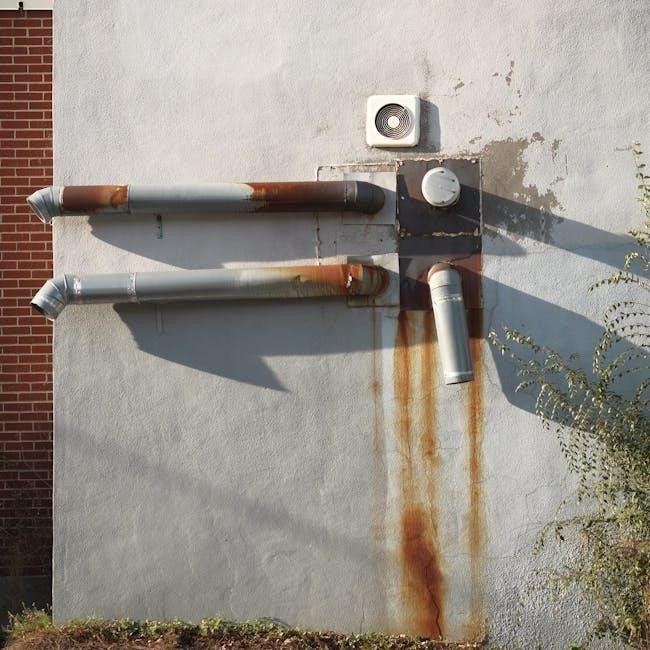
Determining whether your Williams wall furnace utilizes a direct-vent or non-direct-vent system is crucial for safe and efficient operation. Direct-vent models, such as the Williams 1403822, feature a sealed combustion chamber and dedicated venting pipes running directly through an exterior wall.
Non-direct-vent systems, common in older units, draw combustion air from the room and vent exhaust through a chimney or existing flue. Carefully inspect the furnace’s installation; the presence of dedicated exterior venting clearly indicates a direct-vent setup. Always consult a qualified technician if unsure.
Altitude Adjustments
Williams furnaces, especially at elevations above 5200ft, may require adjustments for optimal combustion. The FO 038145 model is noted for altitude sensitivity.
Impact of Altitude on Furnace Performance
Williams wall furnaces, like many gas appliances, experience reduced efficiency at higher altitudes. This is due to the decreased air density, meaning less oxygen is available for complete combustion. Insufficient oxygen leads to incomplete burning of the gas, potentially creating carbon monoxide and reducing heat output.
Specifically, models operating above 2,000 feet may require adjustments to the gas-to-air ratio. The Williams 1403822 is rated for up to 2,000ft without adjustment, but higher elevations necessitate professional tuning. Ignoring altitude impacts can cause soot buildup, inefficient operation, and safety hazards. Proper ventilation is crucial at all elevations, but especially important when altitude adjustments are needed.
Adjusting for Higher Elevations (Up to 2,000 ft)
While some Williams models, like the 1403822, are rated for operation up to 2,000 feet without adjustment, understanding potential needs is vital. For elevations approaching this limit, carefully observe the flame color during operation. A lazy, yellow flame indicates incomplete combustion and a need for adjustment.
Consult a qualified HVAC technician for proper tuning. Adjustments typically involve modifying the gas valve setting to compensate for reduced air density. Do not attempt adjustments yourself without proper training, as incorrect settings can create dangerous conditions. Always prioritize safety and professional expertise.
Furnace Age Determination
Serial numbers offer clues to age, but Williams’ cross-referencing of obsolete models and the house’s building date are also helpful indicators.
Using Serial Numbers to Estimate Age
Determining the age of a Williams wall furnace using the serial number can be challenging, as comprehensive historical records aren’t readily available publicly. However, the serial number, like A 76636 found on a model A35-Samp, provides a starting point.
While a direct lookup isn’t always possible, contacting Williams directly, or engaging with online communities like the Reddit r/hvacadvice forum, may yield insights from individuals with experience or access to internal data.
Remember to supplement this information with the age of the building itself – a furnace installed in a 1960s home is likely from that era, narrowing down the possibilities.
House Building Date as a Reference
Establishing the year a home was constructed offers a valuable, albeit approximate, timeframe for the Williams wall furnace’s installation. If a house was built in the 1960s, as mentioned in a Reddit post, the furnace likely originates from that period or shortly thereafter.
This information, combined with the model number (like A35-Samp) and serial number (A 76636), helps narrow the search for relevant manuals and parts.
However, remember that furnaces can be replaced, so the building’s age isn’t definitive; it’s a crucial piece of the puzzle when researching older Williams units.
Replacement Parts and Compatibility
Williams parts may be compatible with Dayton, Sears, and Kenmore models, but careful cross-referencing is essential when sourcing replacements for older units.
Sourcing Replacement Parts
Finding replacement parts for older Williams wall furnaces can present challenges due to the company’s history of manufacturing for other brands. Dedicated Williams parts suppliers are becoming less common, necessitating resourceful searching. Online auction sites, like eBay, often host listings from individuals parting out older units, offering potentially affordable options.
Specialty appliance parts retailers may also carry some components, though availability varies. When searching, utilize both the Williams model number and any corresponding Dayton, Sears, or Kenmore cross-reference numbers to broaden your search. Always verify part compatibility before purchasing, referencing the original manual if available.
Compatibility with Other Brands (Dayton, Sears, Kenmore)
Williams frequently manufactured wall furnaces under different brand names, including Dayton, Dearborn, Kenmore, Montgomery Wards, Sears, and Grainger. This means parts are often interchangeable between these models and genuine Williams units. When seeking a manual or replacement parts, searching under these alternative brand names is crucial.
Cross-referencing model numbers is essential; Williams provided a link for obsolete models to newer numbers. A Sears or Kenmore manual might contain the same diagrams and parts lists as a Williams version. Always confirm compatibility based on the specific model and serial number before making any repairs.